Saturday, September 19, 2009

White Wood Asters

You can see White Wood Asters growing all over the place, particularly where lawns meets woods. Individually, these are not a very stunning flower, but en mass they can be very attractive. The picture below shows them growing along the edge of my driveway. I didn't plant them. They were a byproduct of my efforts to reduce brushy growth that might scratch our cars, and the fact that not much else is well adapted to dry, shady conditions.

At Eklund Garden you are greeted with a line of asters as soon as you open the gate. I assume the lack of asters on the other side of the gate is due to deer browsing (we often see deer on the outside of the gate...it seems to be a route they follow).

And there are plenty blooming where the house was once located. These all came on their own. I did actually transplant some up above and now am kicking myself for wasting my time. This is one you just don't need to transplant. It will come all on its own! Note that White Wood Aster is extremely tolerant and can withstand very dry, shady areas. The leaves can be a little rough and weedy looking, so it makes a good border for natural areas.


Saturday, September 5, 2009

"Garden in the Woods" Visit

Recently I had the pleasure of visiting the largest native species garden that I know of in the region: "The Garden in the Woods" by the New England Wildflower Society in Framingham, Mass. (just west of Boston). It was much larger than I expected. The board below is a neat idea: Removable picture cards of each plant are posted when the plant is in bloom.


Here's an invasive plant jail, with various species of invasives behind bars. Brilliant.


This is a floating island. It looks like rock but the thing was moving through the water a bit from the breeze. You can see some pitcher plants on it. This might be an interesting thing to do in the vernal pool down below, because only the center gets any real sun.
They had some little white 'tents' protecting caterpillars. This one I believe is a cecropia moth, which I just read has been in decline due to parasitism from an organism that was brought in to parasitize gypsy moths. For more pictures see here.


Wednesday, July 29, 2009

American Pennyroyal

Bonus today! The aromatic groundcover I figured was some non-native herb/weed planted by the Eklunds is actually native, and it's functioning nicely as a "lawn." All year I have wondered what was giving off such an aroma while we worked on the rock garden.

I finally took the time to track down which plant was the cause of the smell and discovered there was lots of it, especially up towards the top. In the picture below you can see it growing in front of the rock bench, looking pretty much like mowed grass from a distance. It's been cropped with a string trimmer a few times. It's in the mint family and is not toxic as the name might otherwise suggest (it's also called American False Pennyroyal).

Garden Views

I needed some pictures to submit Eklund Garden in the "Adopt-A-Garden" program at City Hall, so I stopped by to take a few on a nice cloudy day (no shadow patterns to mess up the photos). Here are the photos I submitted:


Friday, July 24, 2009

Garden Work

Emma and Biscuit joined me for an afternoon of gardening today. While Emma weeded, I applied 200 lbs of dolomite to the various beds, deadheaded, and staked some of the flowers. Here's Emma weeding below:


And Biscuit standing guard or something...

When I threw down lime on the area where the house used to be, a bunch of these tiny frogs started jumping around. I think they are pickerel frogs that just morphed from tadpoles in the vernal pool below the garden. I also saw some more red eft newts.


Emma took a break on the rock garden.


We should get a lot more blooms next year.

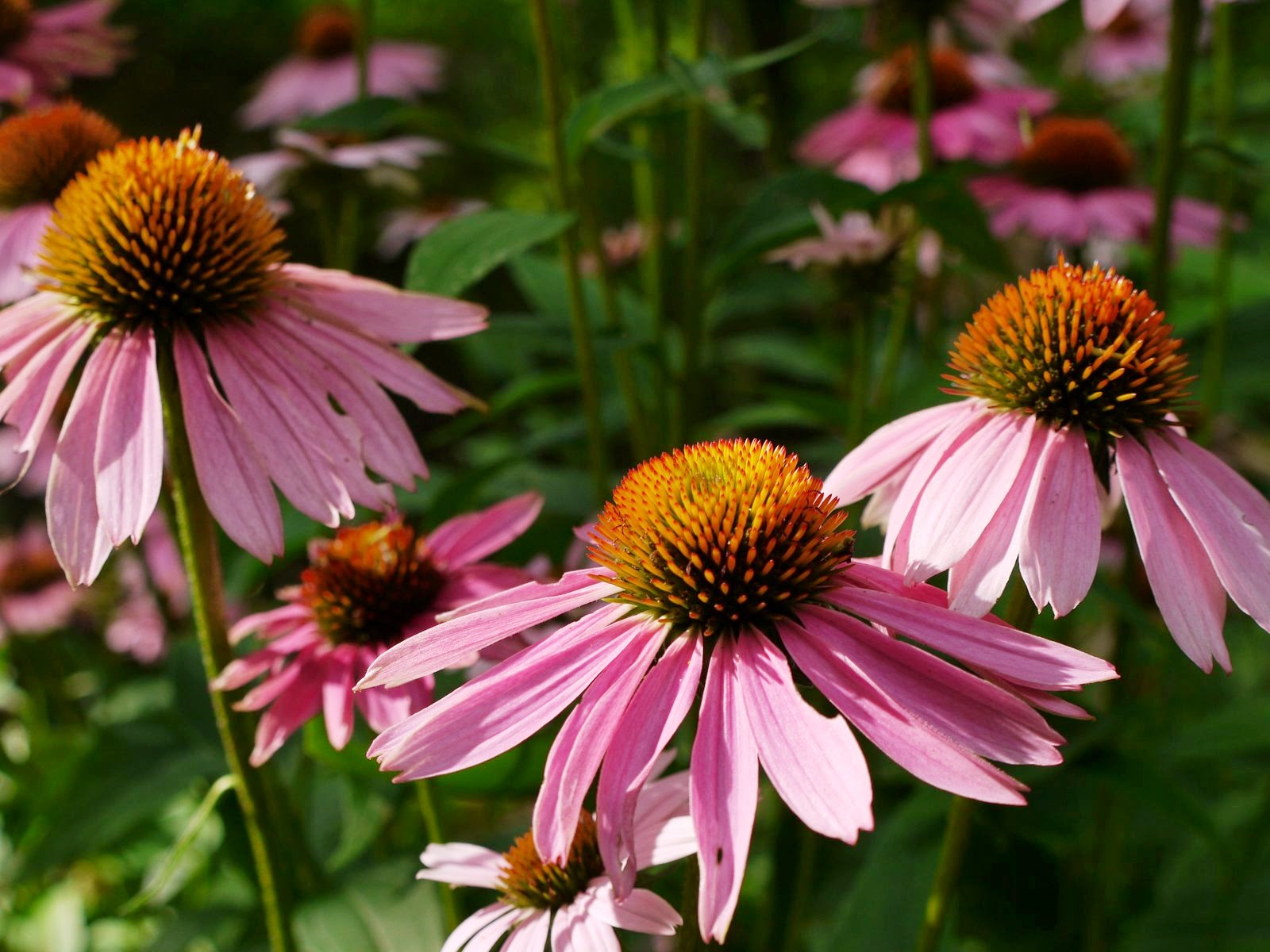
Purple Coneflower, Bee Balm, Butterfly Weed, Giant Hyssop

Some new bloomers today, all favored by butterflies and bees:

Purple Coneflower.

Bee Balm (Monarda didyma)


Butterfly Weed.

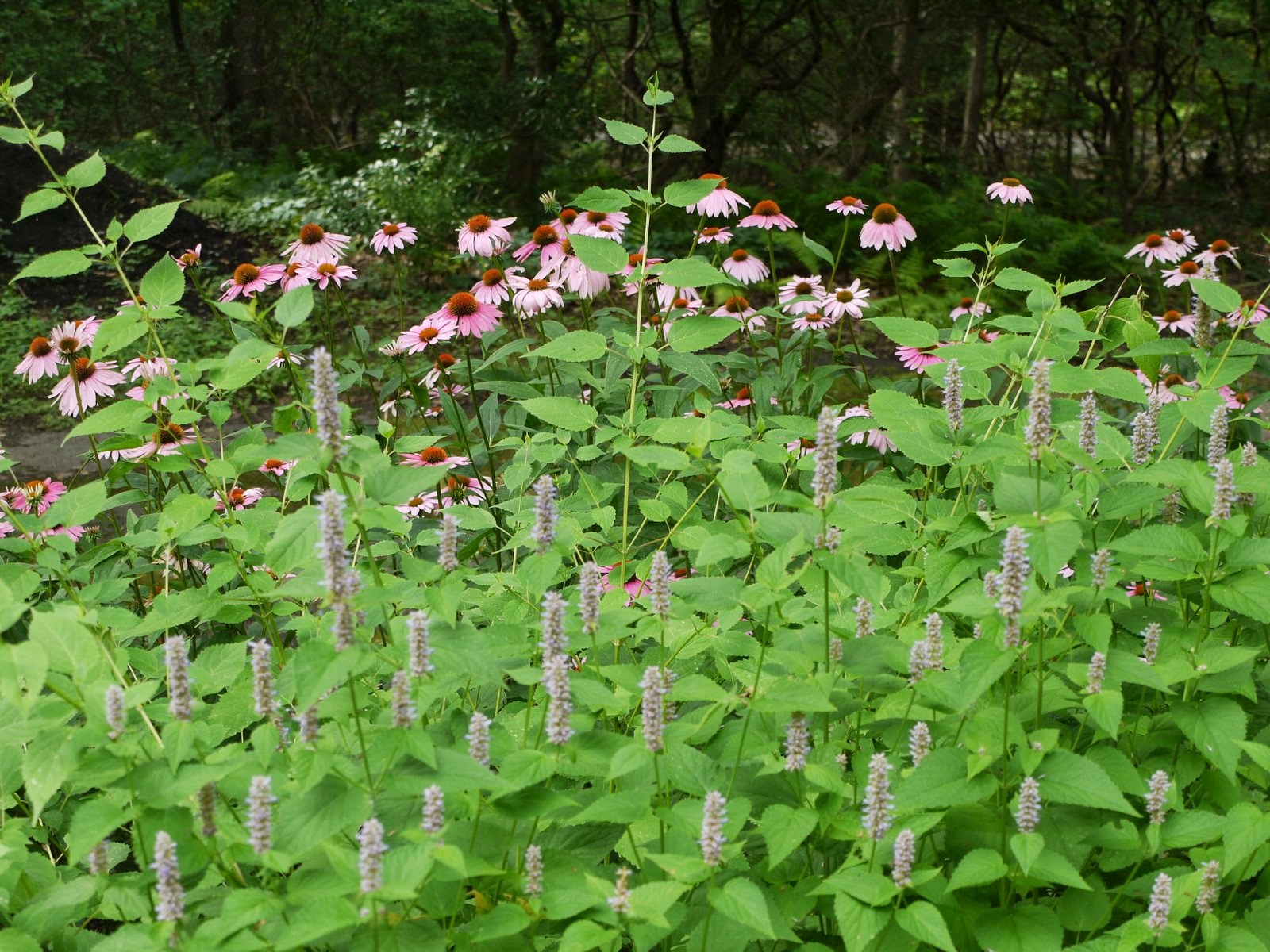
This plant came in as a hitchhiker with some Milkweed from Earth Tones. I believe it is the Purple Giant Hyssop (Agastache scrophulariaefolia - and they wonder why people don't like to use the botanical names), a native plant in Connecticut. It's in the mint family and is aromatic. I have no way of separating from the milkweed, however.

Tuesday, July 21, 2009

Soil Analyses

The soil results are back from the CT Agricultural Experiment Station. For price of postage ($8) they analyzed 5 composite samples from the various beds around the garden (note: anyone can do this). I was particularly curious about the fill that had been brought in where the house once stood. In the picture below, that's the soil to the right, compared to the nice dark soil on the left from the Butterfly bed.

Of particular interest was pH. I have been working under the assumption that the pH is particularly low here since we have pines and oak all around and because of all the heath species growing. On the other hand, we were adding Sweet Peat to the soil, which has some limestone added. So I wasn't sure how the pH would test out.

The results ranged from 4.6 to 5.6, all acidic as expected, even with the Sweet Peat added. Many native species like acidic soil. But how acidic? I once had a sick rhododendron and sent in some soil for testing. The reply was that the soil was too acidic even for rhododendrons, a species well known for requiring acidic soil. The pH was 3.8 or something ridiculous like that, and I had to add limestone.

I found the chart at right of pH indicator plants in "A Sierra Club Naturalist's Guide to Southern New England" (click to enlarge). Listed plants growing at Eklund prior to planting included Mountain Laurel, Blueberries, Pink Lady Slipper, Canada Mayflower, Partridgeberry, and Interrupted Fern. All but the last one are listed as preferring a pH of 4 to 4.5. Some of the plants we've just recently added, such as Red Trillium, Maidenhair Fern, Asters, Wild Geranium, Baneberry, Columbine, and Sharp-Lobed Hepatica are all listed as prefering a pH of either 5 to 6 or 6 to 8. Therefore our goal will be to bring most of the garden beds up to a pH of 6. The exception will be the heath walk up the stairs and through the pine trees, which will remain very acidic.

As for the fill that was brought in, I'm somewhat suspicious of the reported results, which listed the soil as "sandy loam" even though this soil clumps tightly if you squeeze it and turns into concrete blocks when dry. All the soils were reported to be sandy loam. It is listed as having low-medium organic matter, so a priority would be to add some type of compost.

I'll be calling the Ag Station for clarification about recommended rates of limestone application since they don't specify what pH they are aiming for. The results are shown below (click to enlarge).